Type of Content: Interviews

Learning From World War II

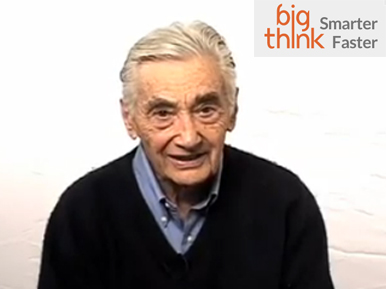
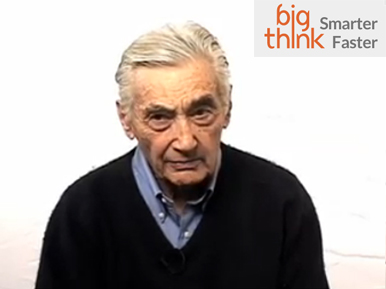
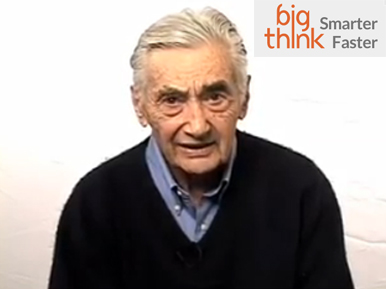
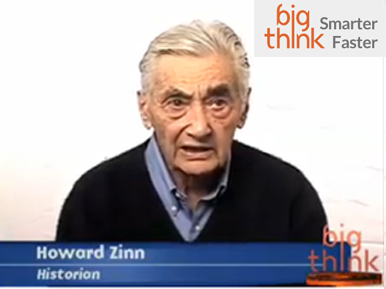
Howard Zinn interviewed by BigThink. May 8, 2008.
What did you learn from your experience in WW II?
HOWARD ZINN: I didn’t learn much about myself during that time, that is, while I was at war. You don’t learn much while you’re in the military except doing your job.
Read More »

Howard Zinn on Iraq: Advice for the Next U.S. President

Interviewed by BigThink • 5/8/08
What should the next U.S. President do to get the military out of Iraq?
HOWARD ZINN: I think the next president should begin, announce the immediate withdrawal of American troops from Iraq. I think this will be a very healthy thing for Iraq. The American occupation has not helped a thing. It has not stopped civil war; it has provoked civil war. It has not given the Iraqi people security or democracy; it has given them the opposite. It has ruined their country. And, of course, it has ruined our country, too.
Read More »

Howard Zinn on the Limitations of American History Books

Howard Zinn interviewed by BigThink. May 8, 2008.
"A more realistic and more truthful history would take a look at American foreign policy over the last several hundred years, really. It will take a look at American foreign policy and see it for what it has been–expansionist, violent and militaristic. In other words, it would be a history that would be honest in the way that we expect individuals to be honest about themselves and their past and to rectify their mistakes."
Read More »

Howard Zinn on the World Today

Howard Zinn interviewed BigThink. May 8, 2008.
What is the state of the world today?
HOWARD ZINN: The world today, 2008, it’s trying to overcome American dominance in the world, trying to overcome the American military bullying that’s taking place here and there in the world, in Iraq and Afghanistan and military bases in a hundred countries.
Read More »

An Interview with Howard Zinn

Howard Zinn interviewed by Shelly R. Fredman. ZCommunications. May 22, 2006.
"For those who find a special inspiration in Judaism or Christianity or Buddhism or whatever, fine. If that inspiration leads them to work for justice, that is what matters."
Read More »

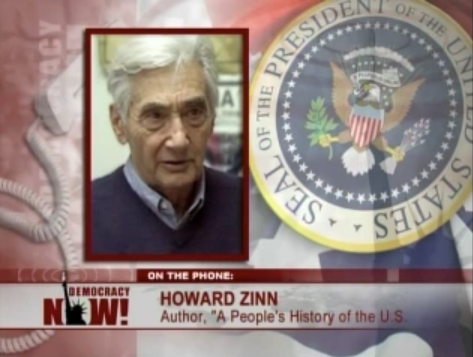
‘To Be Neutral, To Be Passive In a Situation Is to Collaborate With Whatever Is Going On’

Howard Zinn interviewed by Amy Goodman. Democracy Now! April 27, 2005.
Howard Zinn: I believe neutrality is impossible, because the world is already moving in certain directions. Wars are going on. Children are starving. And to be neutral, to pretend to neutrality, to not take a stand in a situation like that is to collaborate with whatever is going on, to allow it to happen. I did not want to be a collaborator with what was happening. I wanted my history to intercede and to take a stand on behalf of peace, on behalf of a racial equality or sexual equality..."
Read More »

Critical Thinking

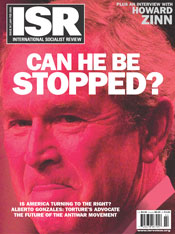
Howard Zinn interviewed by David Barsamian. International Socialist Review. July 21, 2004.
This interview was conducted at at Harvard University in Cambridge, Massachusetts and included in the book, Original Zinn: Conversations on History and Politics.
Read More »

Zinn: ‘Bush Represents Everything That Martin Luther King Opposed’

Howard Zinn interviewed by Amy Goodman. Democracy Now! Jan. 20, 2005.
HOWARD ZINN: It’s interesting that the inauguration should come a few days after the celebration of Martin Luther King’s birthday, because here we have Bush being inaugurated as President after the — all of the hypocritical statements made on Martin Luther King’s birthday by our leading politicians, and who talk sort of very rhapsodically about Martin Luther King, but absolutely really taking what he stands for and pushing it aside, because Bush represents everything that Martin Luther King opposed.
Read More »

HREA Director Interviews Historian Howard Zinn

Howard Zinn interviewed by Felisa Tibbitts. Human Rights Education Association. January 5, 2005.
Historically, how do you think schools have served as a catalyst for social change and furthering the human rights movement?
Zinn: I think it works both ways. Students who learn in school about what is going on in the world are motivated to do something about it, to act on what they have learned. When I say it goes both ways, when you have students become active in human rights and feel that human rights has touched them personally, then they are likely to come back into the classroom and have the curriculum reflect their own consciousness.
Read More »
Read, Learn, & Make History
Check out the Howard Zinn Digital Collection to search Zinn’s bibliography by books, articles, audio, video, and more.
Share This Page:
Like on Facebook
FOLLOW ON TWITTER
SIGN UP FOR NEWSLETTER