LaGuardia in Congress by Howard Zinn
Published by Cornell University Press, 1959; Fall Creek Books, 2010.
Fiorello LaGuardia is known best as the tempestuous mayor of New York City in the days when Franklin Delano Roosevelt sat in the White House. There had been, however, an earlier time, which matched his mayoralty years in sheer drama and perhaps surpassed them in lasting achievement — LaGuardia’s years in Congress.
He served in the House of Representative almost continuously from 1917 to 1933, representing two ethnically diverse congressional districts: the Fourteenth (Greenwich Village), from 1917 to 1919, and the Twentieth (East Harlem), from 1923 to 1933. Although barred from important committee posts because of his political independence and thus denied from playing a direct role in lawmaking, he was a tireless and vocal champion of progressive causes, from allowing more immigration and removing U.S. troops from Nicaragua to speaking up for the rights and livelihoods of striking miners, impoverished farmers, oppressed minorities, and struggling families. A goad to the era’s plutocrats and their enablers in government, LaGuardia fought for progressive income taxes, greater government oversight of Wall Street, and national employment insurance for workers idled by the Great Depression.
In this book, first published by Cornell University Press in 1959, Howard Zinn establishes LaGuardia’s tenure in Congress as a vital link between the Progressive and New Deal eras, offering a lively and informative account of his many legislative battles, his political philosophy, and the distinctly urban (specifically, New York City) sensibilities he brought to the Progressive movement. [Description from Roam Agency]

Previous Edition
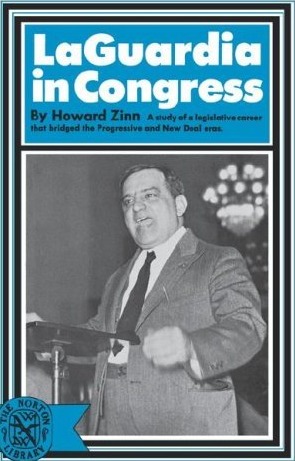
Table of Contents
1. The New Congressman from Manhattan, 1917 • p. 1
2. Fighting the War, in Congress and at the Front • p. 17
3. The Issues of Peace, 1919 • p. 34
4. Bitter Interlude, 1920-1922 • p. 48
5. Return to Congress in the Age of “Prosperity” • p. 53
6. LaGuardia, La Follette, and Progressivism, 1922-1924 • p. 67
7. Battling Nativism in the Coolidge Era • p. 85
8. The Legacy of the Red Scare • p. 97
9. Pointing to a New Foreign Policy • p. 107
10. The Battle for Public Power in the Twenties • p. 122
11. The “Other Half” in the New Gilded Age • p. 135
12. LaGuardia and Progressive Politics, 1924-1929 • p. 158
13. Hunger vs. Private Enterprise: First Round • p. 175
14. Second Round: Relief, Public Works, and Tear Gas • p. 194
15. “Foul Birds of Prey”: The Financiers • p. 207
16. Triumph on Two Fronts: Taxes and Labor Injunctions • p. 218
17. Communism, Nativism, and Foreign Policy • p. 231
18. Political Defeat and Moral Victory, 1932-1933 • p. 241
19. Fiorello LaGuardia in Congress: An Appraisal • p. 259
Bibliography • p. 275
Index • p. 285